
Eating more protein does more than fill you up. It changes how your body loses weight, helping you shed fat while holding on to the muscle that keeps your metabolism working.
Adopting a diet high in protein is one of the most effective ways to lose weight and keep it off. At Just Lose Weight MD, we regularly see patients achieve better fat loss and improved body composition when a well-structured high-protein plan is paired with medical supervision.
Protein does a lot of heavy lifting during weight loss. It keeps you full for longer, supports muscle repair, and helps protect your resting metabolic rate (RMR). That matters even more for patients on GLP-1 medications like Semaglutide and Tirzepatide, where appetite drops sharply.
Why a High-Protein Diet Is Essential for Sustainable Weight Loss

Protein is made of amino acids, the building blocks of muscle. During a calorie deficit, a diet rich in protein signals your body to hold on to lean mass and burn stored fat for energy instead.
Key benefits of a high-protein diet:
- Increases fullness and reduces cravings
- Raises the thermic effect of food, so you burn more calories digesting it
- Supports muscle protein synthesis, how your body builds and repairs muscle
- Helps preserve a higher resting metabolic rate by protecting muscle mass
- Improves blood sugar control and macronutrient balance
Research on protein and weight management generally supports intakes of roughly 1.6-2.2 grams of protein per kilogram of body weight for people actively losing fat, with better muscle retention and easier long-term maintenance than lower-protein diets.
Animal proteins tend to have higher bioavailability, meaning your body absorbs and uses their amino acids more readily than many plant sources. A balanced mix of both usually works best.
| Body Weight | Daily Protein Target (grams) | Per Meal (3-4 meals) |
| 60 kg (132 lbs) | 96-132 g | 24-44 g |
| 70 kg (154 lbs) | 112-154 g | 28-51 g |
| 80 kg (176 lbs) | 128-176 g | 32-58 g |
| 90 kg (198 lbs) | 144-198 g | 36-66 g |
For patients on Semaglutide or Tirzepatide, Dr. Olasupo Odunsi usually recommends the higher end of this range to protect muscle and resting metabolic rate.
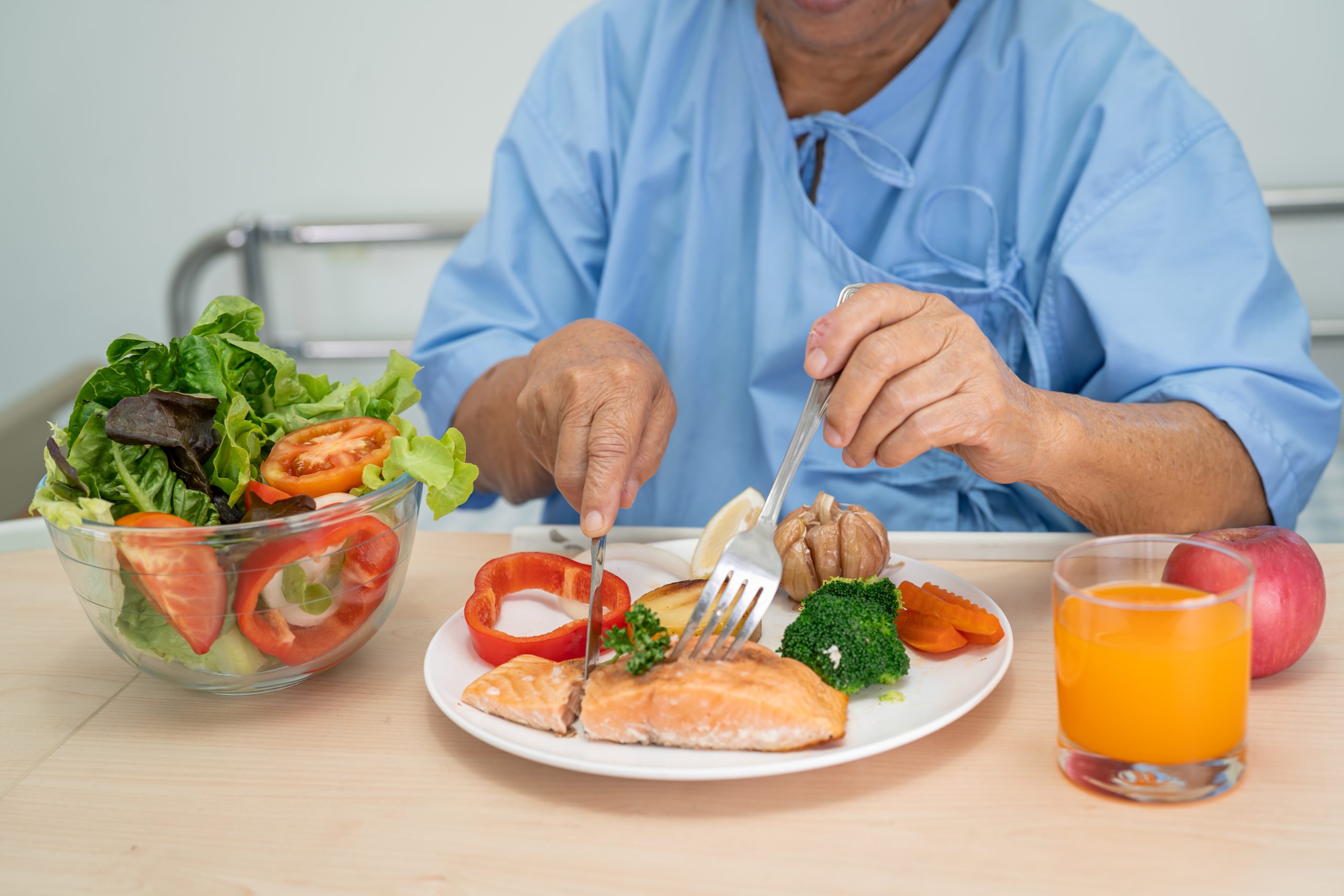
GLP-1 medications are excellent for appetite control, but eating less can make it hard to hit your protein target. Come up short and you risk losing lean mass, which lowers your resting metabolic rate and slows progress. A high-protein diet helps GLP-1 users:
- Protect muscle through muscle protein synthesis
- Maintain a higher resting metabolic rate
- Feel fuller on fewer calories
- Improve overall body composition
Appetite suppression is one of the tools we use alongside nutrition. See our appetite suppressant options for how medication and diet work together.
High-bioavailability animal sources:
- Chicken breast, turkey, lean beef
- Salmon, tuna, shrimp, and other fish
- Eggs and egg whites
- Greek yogurt and cottage cheese
Plant-based sources:
- Tofu, tempeh, and edamame
- Lentils, chickpeas, and quinoa
- High-protein plant yogurts and powders
A Sample High-Protein Day
Breakfast (30-35g protein): Greek yogurt with berries and whey protein
Lunch (40g protein): Grilled chicken salad with mixed greens and olive oil
Dinner (40g protein): Baked salmon with broccoli and quinoa
Snacks (15-25g): Cottage cheese, a protein shake, or turkey slices
This plan lands around 140-160g of protein a day while supporting fullness and muscle repair.
The best results happen when a high-protein diet is paired with expert care. Through our medical weight loss program, Dr. Olasupo Odunsi builds personalized plans that combine:
- Semaglutide and Tirzepatide treatment
- Customized high-protein nutrition
- Body composition analysis with our Styku 3D body scanner
- Safe strength training guidance
This combined approach helps patients lose fat, preserve muscle, protect metabolism, and hold their results.
Practical Tips to Get It Right
- Build every meal around a protein source first
- Spread protein evenly through the day to support muscle repair
- Stay well hydrated, since protein metabolism needs extra water
- Add fiber-rich vegetables for digestion
- Track progress with body composition scans, not just scale weight
- Add resistance training 2-3 times per week
A high-protein diet is a practical, well-supported strategy: it curbs hunger, protects muscle, and helps keep your metabolism steady while you lose fat. Add medical supervision and the results get more consistent and easier to sustain.
At Just Lose Weight MD, we don't hand out generic diets. Our medical team tailors each high-protein plan to your metabolism, medications, and goals.
Ready to start? Book online or contact us at any of our locations:
- Takoma Park, MD: (301) 434-0075
- Rockville, MD: (301) 603-2811
Telehealth options are available for Maryland, Virginia, and DC residents.
Medical Disclaimer: This article is for educational purposes only and does not constitute medical advice. Always consult a qualified healthcare professional before making significant dietary changes.