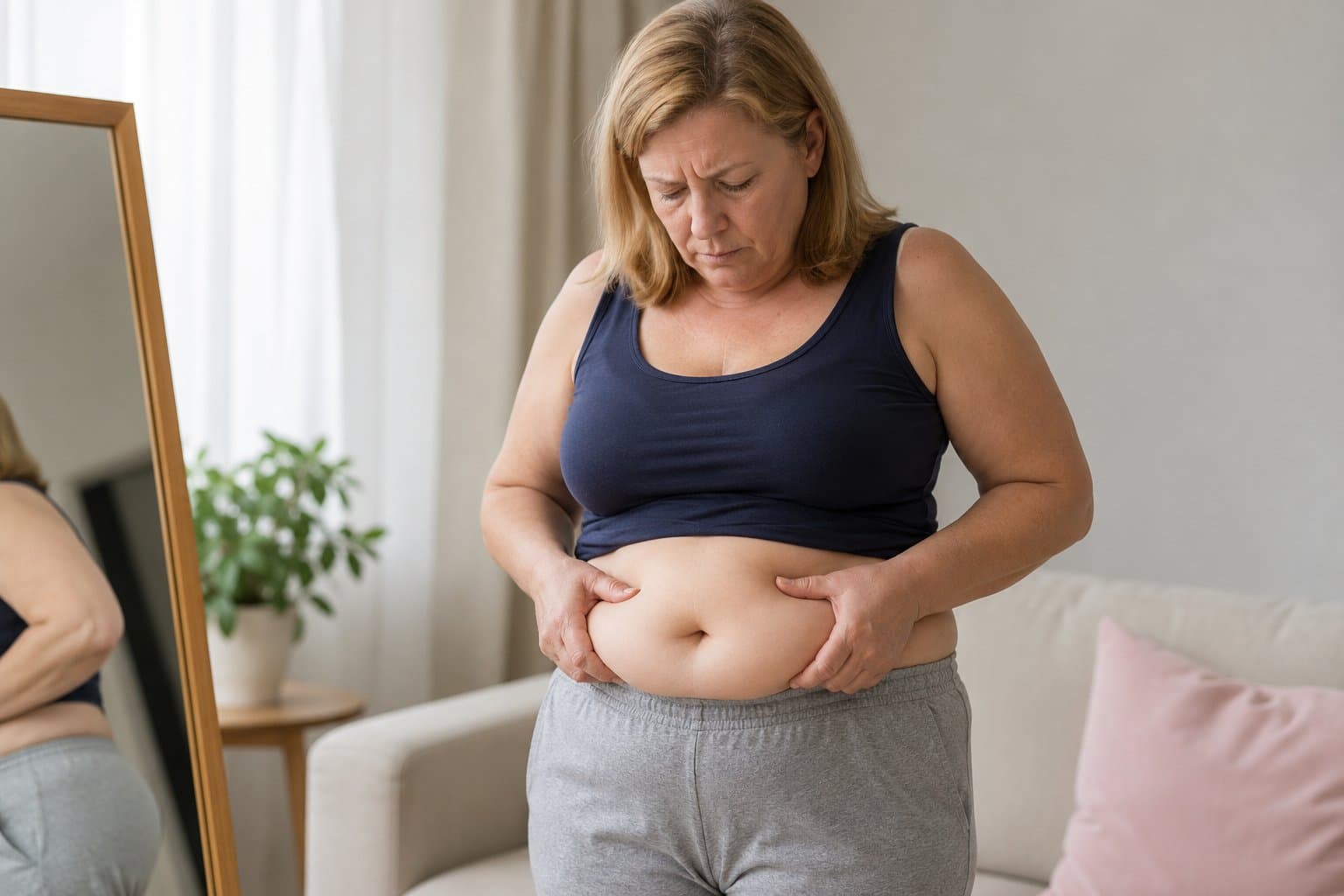

The frustrating part is not just the number on the scale. It is doing the same things that always worked and watching them stop working, usually around the midsection.
Plenty of women reach their forties, keep eating and moving the way they always have, and still notice the weight creeping on. Perimenopause weight gain is not your imagination, and it is not a lack of willpower. The rules genuinely change during this transition, which is why a plan built for this stage, such as a supervised medical weight loss program, works better than the one that worked at 25.
The short answer
Perimenopause weight gain happens because falling and fluctuating estrogen, a natural loss of muscle with age, poorer sleep, and rising insulin resistance all push the body toward storing more fat, especially around the abdomen. It is a metabolic shift, not a personal failure, and it responds to a plan built for this stage of life.
What is driving it
Shifting estrogen
During perimenopause, estrogen does not simply decline in a straight line. It swings up and down before settling lower. As it falls, the body tends to move fat storage from the hips and thighs toward the belly. That is why many women notice their shape changing even when their weight has not moved much yet, a pattern covered further in can estrogen cause weight gain.
Losing muscle
Starting in the thirties and accelerating later, adults gradually lose muscle mass unless they actively work to keep it. Muscle burns more calories at rest than fat does, so as it shrinks, daily calorie needs drop. Eating the same amount you always did can now leave a surplus.
Sleep and stress
Night sweats and disrupted sleep are common in perimenopause, and short sleep raises appetite hormones and cravings the next day. Ongoing stress adds cortisol, which encourages abdominal fat storage. The two feed each other.
Insulin resistance
Hormonal changes in this phase can make cells less responsive to insulin. When that happens, the body stores fat more readily and burns it less easily, which makes weight harder to lose with the old approach.

Why it settles around the belly
The move toward abdominal fat is one of the most common and most disliked changes. It matters for more than appearance, because fat stored deep in the abdomen is more metabolically active and is linked to higher risk for heart and metabolic problems. That is one reason addressing perimenopause weight gain is worth doing for health, not just for how clothes fit. If the stomach is your main concern, menopause weight gain in the stomach goes deeper on that pattern.
What actually helps
The good news is that this stage responds well to a few targeted changes, especially when they are combined.
- Protect and build muscle. Resistance training two or more times a week is one of the most effective tools, because it defends the muscle that keeps your metabolism up.
- Prioritize protein. Higher protein intake supports muscle and helps with fullness, which makes appetite easier to manage.
- Fix sleep where you can. Better sleep steadies the hunger hormones that drive next-day cravings.
- Address the hormones directly. For some women, hormone therapy can ease symptoms that make weight harder to manage, which is a conversation to have with a provider. Some also find magnesium useful for sleep and symptom support.
- Consider medical support. When lifestyle changes are not enough, options like appetite suppressants or GLP-1 medications such as semaglutide can help, always under supervision.
Why a supervised plan helps
Because perimenopause weight gain has several overlapping causes, a plan that only cuts calories often stalls. A supervised program can look at the whole picture, hormones, muscle, sleep, and metabolism, and adjust as your body changes. Tracking a body composition scan over time also shows whether you are losing fat and holding onto muscle, which is far more useful than the scale alone during these years.
When to check in with a provider
Perimenopause is the transition leading up to menopause, and it can start years before periods stop. Some weight change during it is normal, but a few things are worth a conversation. Rapid or unexplained weight gain, weight that climbs despite real effort, or symptoms like heavy fatigue, hair thinning, or feeling cold can point to thyroid or other issues that deserve a look rather than more dieting. A provider can run the right checks, rule out other causes, and make sure the plan matches what is actually happening in your body instead of guessing.
Talk it through
If the usual approach has stopped working, that is information, not defeat. A provider can help you build a plan suited to this stage, in person or by telehealth. Reach Takoma Park at (301) 434-0075 or Rockville at (301) 603-2811, or book online.