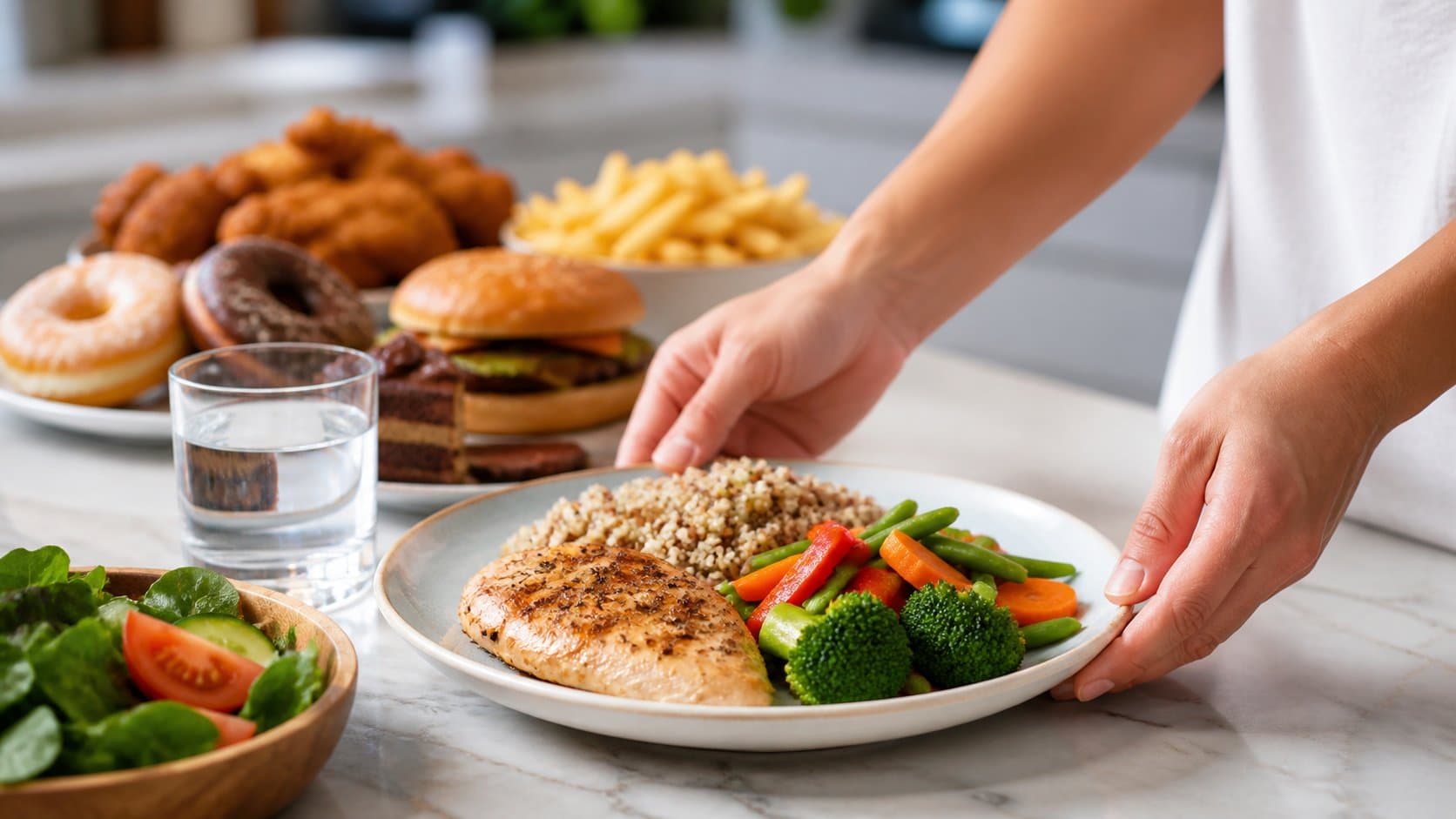

Two weeks is enough time to see real change, but only if you lose fat instead of water and muscle. Here's how a supervised 14-day plan works, and why crash diets backfire.
When people want to lose weight in two weeks, they are usually picturing a fast, visible change. That is possible, but there is an important catch: there is a big difference between losing weight and losing fat. At Just Lose Weight MD, our medical director Dr. Olasupo Odunsi helps patients in Maryland and Virginia use that 14-day window wisely, with science instead of guesswork.
Fat loss vs. water and muscle
On a typical crash diet, the scale might drop 10 pounds, but a lot of that is water and muscle, not fat. Losing muscle is exactly what you do not want, because it slows your metabolism and sets you up to regain the weight. The goal of a medical plan is the opposite: target stored fat while protecting your lean muscle, so the results actually hold.
Why crash diets stall out
Eat too little and your body fights back. A survival mechanism called adaptive thermogenesis slows your metabolism to conserve energy, which is why progress often grinds to a halt after the first few days. Hormonal barriers like insulin resistance and high cortisol make it even harder. A supervised plan works around these by addressing your internal chemistry, not just your calorie count.
What a medical 14-day plan looks like
Here is the kind of structured approach we use, and what patients tend to notice along the way.
- Days 1 to 3: We focus on stabilizing blood sugar and reducing inflammation. This is when most people notice a real drop in bloating.
- Days 4 to 7: We add supportive therapies like lipotropic B12 injections to help your liver process fat and keep your energy up.
- Days 8 to 11: For patients using semaglutide or tirzepatide, cravings and constant food noise usually quiet down, and the scale starts reflecting true fat loss.
- Days 12 to 14: We review your progress and calibrate the plan for the months ahead, because two weeks is a foundation, not a finish line.
Why supervision makes the difference
The reason a medical plan outperforms going it alone comes down to a few things:
- We test instead of guessing. We look at why your body is holding onto weight, including your hormones.
- We use FDA-approved tools like GLP-1 medications when they fit your plan.
- We meet you where you are. Patients in Maryland and Virginia can manage their plan in person or through secure telehealth.
A body composition scan shows how much of your loss is actually fat, so you know the two weeks worked. Ready to start the right way? Book a consultation and we will build a plan around your biology, not a crash diet. Learn more about our full medical weight loss program.