If food suddenly feels heavier or less appealing after your weekly shot, you are not imagining it. A few simple swaps can settle your stomach and keep your progress steady.
Starting Mounjaro (tirzepatide) changes how your body handles food. The medication slows how quickly your stomach empties, so meals sit longer and you feel full faster. Certain foods make that feeling uncomfortable, which is why so many patients search for a list of what to avoid.
The short answer
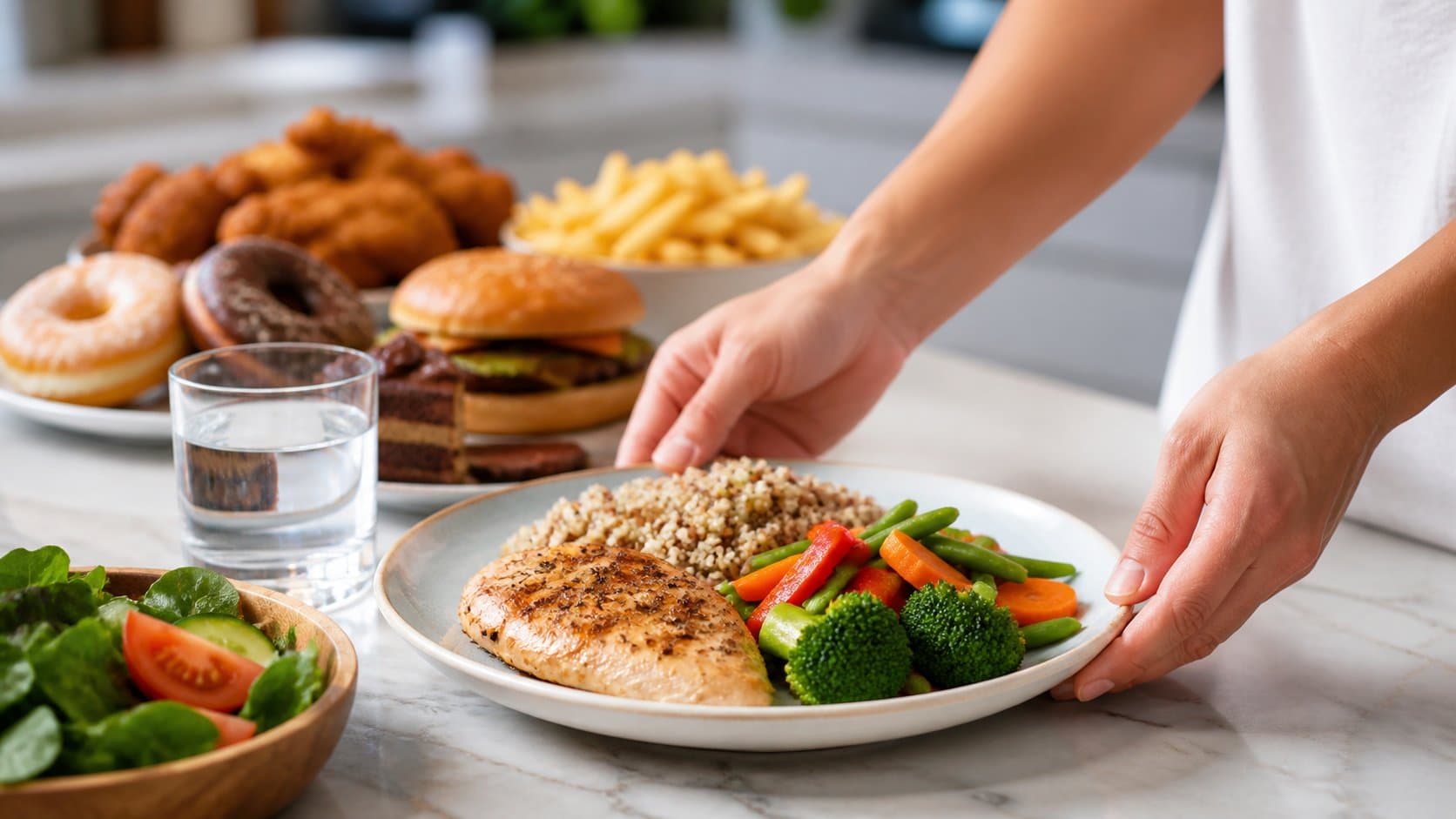
There is no official banned food list for Mounjaro. Nothing is strictly off limits. That said, greasy, fried, very sugary, and heavily processed foods tend to trigger the most nausea, bloating, and reflux while your body adjusts. Most people feel their best on smaller, protein-forward meals with plenty of water.
Foods that tend to cause the most trouble
These are the usual culprits behind an upset stomach in the first weeks and after each dose increase.
- Fried and greasy foods. High-fat meals are slow to digest on their own. On tirzepatide that delay is amplified, which often leads to nausea or a heavy, overfull feeling.
- Sugary foods and drinks. Candy, pastries, and sweetened coffee drinks can spike blood sugar and leave you queasy. They also add empty calories that work against your goals.
- Refined carbs. White bread, chips, and other quick carbs digest fast and can leave you hungry again soon, which makes portion control harder.
- Alcohol. It can irritate the stomach, add sugar, and lower your guard around food. Many patients find even a small amount hits harder than it used to.
- Carbonated drinks. Soda and sparkling water add gas to a stomach that is already emptying slowly, which can worsen bloating.
- Very spicy or acidic foods. These can aggravate reflux and nausea, especially in the day or two after your injection.
What to eat instead
Building meals around protein and fiber helps you stay full without overwhelming your digestion. Good staples include:
- Lean protein such as chicken, turkey, eggs, fish, tofu, and Greek yogurt
- Non-starchy vegetables like leafy greens, broccoli, peppers, and zucchini
- Whole grains and legumes in modest portions, such as oats, quinoa, beans, and lentils
- Fruit with skin or fiber, like berries, apples, and pears
- Water throughout the day, since mild dehydration can look and feel like nausea
Simple habits that reduce side effects
How you eat matters as much as what you eat. Slowing down gives your fuller-feeling stomach time to signal that it has had enough.
- Eat smaller meals more often rather than three large ones
- Stop at about 80 percent full instead of cleaning your plate
- Chew slowly and put your fork down between bites
- Avoid lying down right after eating
- Front-load protein so you get it in before you feel full
These habits tend to matter most in the first few days after each dose and after any increase in your dose. Our team walks through this in more detail in our overview of tirzepatide treatment and in our guide to how Mounjaro supports weight loss.
Does everyone react the same way?
No. Some people breathe through the first weeks with barely a hint of nausea, while others feel it strongly after every dose increase. Body size, eating habits, and how quickly the dose climbs all play a role. Because of that, the smartest approach is to treat the foods above as a starting guide, then pay attention to your own patterns. Keep a simple note of what you ate on the days you felt worst, and you will quickly spot your personal triggers. Many patients find that one or two specific foods, not a whole category, cause most of the trouble, and once they cut those out, meals feel comfortable again.
It also helps to remember that side effects usually fade as your body adjusts to each dose. The stretch right after moving up is often the hardest, so lean on lighter, blander meals during those few days and return to your normal routine once things settle.
When to talk to your provider
Mild nausea usually eases within a week or two. Reach out sooner if you have vomiting that will not stop, severe belly pain, signs of dehydration, or trouble keeping fluids down. These can point to a dose that needs adjusting or another issue worth checking. Under a medically supervised weight loss program, your provider can fine-tune your plan rather than leaving you to guess.
If tirzepatide is not the right fit, there are other options to explore, including semaglutide. Patients across Maryland and Virginia can start with an in-person visit or by telehealth, and you can book online when you are ready.