
BMI is a quick way to see whether your weight falls in a healthy range for your height. Here's the exact formula, a worked example, and what the number really means.
Body Mass Index, or BMI, is a quick screening number that estimates whether your weight is in a healthy range for your height. It will not tell you everything about your health, but it is an easy starting point, and it only takes your height and weight to work out.
How to calculate BMI
There are two versions of the formula depending on the units you use.
- Metric: BMI = weight (kg) divided by height (m) squared
- Imperial: BMI = (weight in pounds divided by height in inches squared) multiplied by 703

A worked example
Say you weigh 70 kg and are 1.75 m tall. Square your height (1.75 x 1.75 = 3.06), then divide your weight by that number: 70 divided by 3.06 is about 22.9. A BMI of 22.9 falls in the normal range. In pounds and inches, someone who is 154 lb and 69 inches tall works out to (154 / 4,761) x 703, which is also about 22.7.
BMI categories
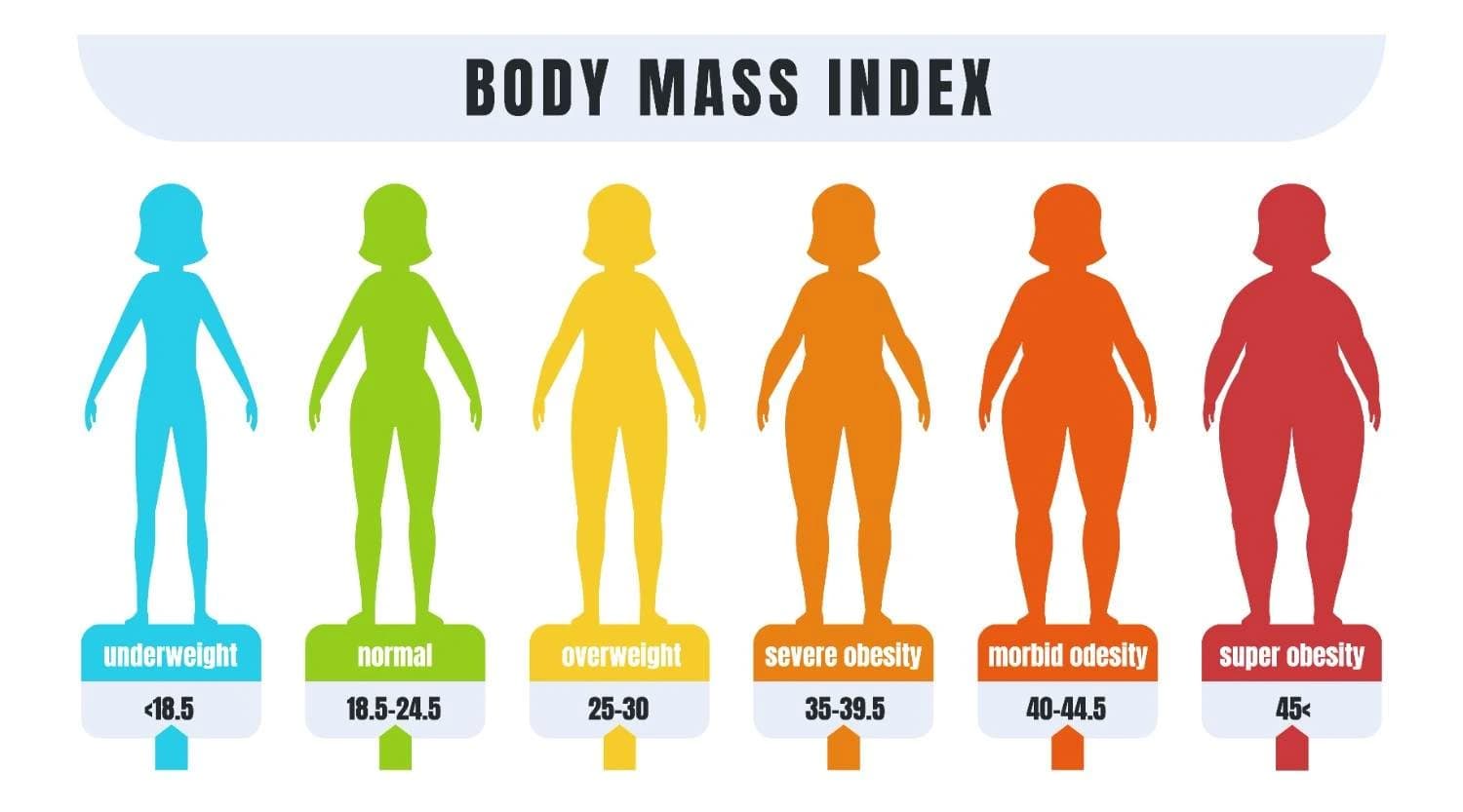
The World Health Organization groups BMI like this:
- Underweight: below 18.5
- Normal weight: 18.5 to 24.9
- Overweight: 25 to 29.9
- Obese: 30 and above
These numbers matter for treatment too. Medications like semaglutide are generally prescribed at a BMI of 30 or higher, or 27 or higher with a weight-related condition.
Why BMI matters
A higher BMI is linked to a greater risk of heart disease, type 2 diabetes, high blood pressure, stroke, and joint problems. Being underweight carries its own risks, including nutritional deficiencies, a weaker immune system, and osteoporosis. That is why BMI is a useful first flag, even though it is not the whole story.

Where BMI falls short
BMI is a screening tool, not a diagnosis, and it has real limitations:
- It does not tell fat from muscle, so a muscular athlete can read as overweight without carrying excess fat.
- It ignores where fat sits, and belly fat carries more health risk than fat elsewhere.
- It is less accurate for children, pregnant women, and older adults.
For a fuller picture, waist-to-hip ratio, waist-to-height ratio, and body fat percentage all add useful detail. Our body composition scan measures your fat and muscle directly, which BMI simply cannot do.
How to keep a healthy BMI
If your number is higher or lower than you would like, small, steady habits move it in the right direction:
- Eat mostly whole foods. Fill up on vegetables, fruit, and lean protein, and cut back on processed food and added sugar. Our appetite suppressants can help if cravings get in the way.
- Move regularly. Aim for about 150 minutes of moderate activity a week, plus some strength training to protect muscle.
- Sleep and hydrate. Seven to nine hours of sleep and enough water both support a healthy metabolism.
If your BMI points to a real health risk, you do not have to sort it out alone. Book a consultation and we will build a plan around your body. See our full medical weight loss program for more.