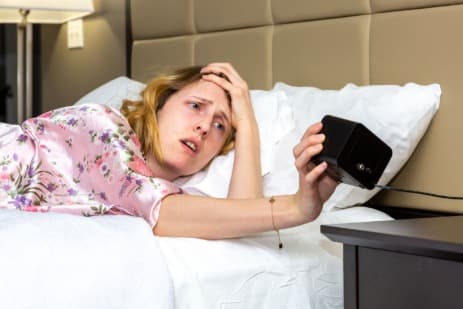

That loud snoring you joke about with your spouse may be tied to the weight you have been trying to lose, and the two problems often feed each other.
If you wake up tired no matter how early you went to bed, snore loudly enough to wake your partner, or feel your energy crash in the middle of the afternoon, obstructive sleep apnea may be part of the picture. It is common among adults across Maryland, DC, and Northern Virginia, and it frequently goes unrecognized for years.
At Just Lose Weight MD we see the connection often, because carrying extra weight is one of the strongest risk factors for sleep apnea. The good news is that the same weight you have been working to lose is also one of the factors you can change to improve it.
What Obstructive Sleep Apnea Actually Is
Obstructive sleep apnea happens when the soft tissue at the back of the throat relaxes during sleep and partially or fully blocks the airway. Breathing pauses, oxygen levels dip, and the brain briefly rouses you to reopen the airway. Most people never remember these events, but they can repeat many times an hour and fragment sleep all night long.
Because the sleep is so broken, people often feel exhausted during the day even after a full night in bed. Over time, untreated moderate to severe sleep apnea is associated with higher blood pressure, heart problems, and other health risks, which is why it is worth taking seriously rather than writing off as ordinary snoring.
How Excess Weight Feeds Sleep Apnea
Extra weight, especially around the neck and upper body, adds soft tissue that can narrow the airway and make it more likely to collapse during sleep. Fat around the abdomen can also reduce lung volume and make breathing less efficient when you lie down.
The relationship tends to run in both directions. Poor, fragmented sleep affects the hormones that control hunger and fullness, which can increase appetite and cravings the next day. Feeling drained also makes it harder to stay active and cook well. That cycle is one reason sleep apnea and weight gain so often show up together.
Why Weight Loss Can Help
Research on obstructive sleep apnea has consistently found that losing weight can reduce its severity, and in some people with mild to moderate disease it can improve symptoms significantly. Even a modest reduction in body weight can lower the number of breathing interruptions and ease daytime sleepiness for some patients.
Weight loss is not a guaranteed cure, and results vary from person to person. It is best thought of as one meaningful piece of a complete plan, often used alongside whatever treatment a sleep specialist recommends. For many people it is the piece that finally moves the needle.
Our medical weight loss program is built around this idea. After a full evaluation, our clinicians may recommend options such as Wegovy (semaglutide) or Mounjaro (tirzepatide) when appropriate, paired with nutrition and activity guidance. We track progress by fat loss over time rather than relying on the scale alone.
Signs Worth Paying Attention To
You do not need every one of these to be worth a conversation with a clinician. A few of them together is reason enough to ask.
- Loud, ongoing snoring that disrupts your partner's sleep
- Waking up gasping or choking for air
- A partner who notices you stop breathing during sleep
- Morning headaches that ease after you have been up a while
- Feeling tired all day no matter how much you slept
- Falling asleep quickly whenever you sit still
- High blood pressure that is hard to control
- A larger neck size
- Trouble focusing, low mood, or ongoing irritability
Getting a Real Diagnosis
Sleep apnea is diagnosed with a sleep study, either in a sleep lab or with an at-home test ordered and read by a sleep physician. If your symptoms point toward sleep apnea, the right first step is an evaluation with your primary care doctor or a sleep specialist, who can arrange testing and, if needed, prescribe treatment such as a CPAP machine or an oral appliance.
Just Lose Weight MD is a weight management clinic, not a sleep lab. We do not perform sleep studies or fit CPAP equipment. What we can do is work on the weight side of the problem, which for many people improves both their sleep and their overall health. When it makes sense, we are glad to coordinate with the sleep specialist handling your diagnosis and therapy.
Where to Start
If you suspect sleep apnea, talk with a doctor about a sleep evaluation. If excess weight is part of your health picture, we can help you build a safe, structured plan to address it. We work with patients across Maryland, DC, and Northern Virginia from our clinics in Takoma Park and Rockville, and we offer telehealth visits for people who prefer to start from home.
To take the first step, book an appointment online or contact our team and we will help you find the right starting point.