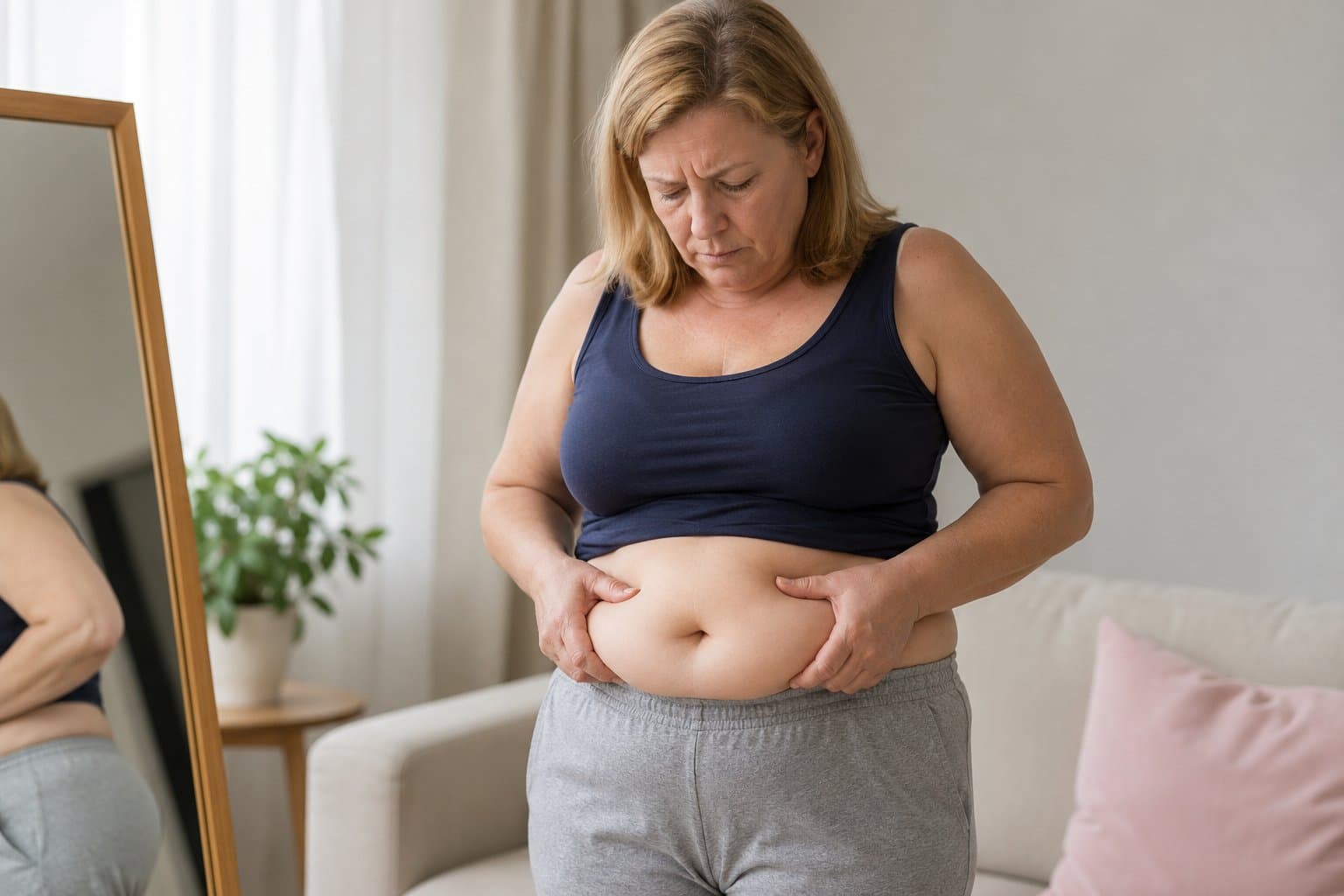
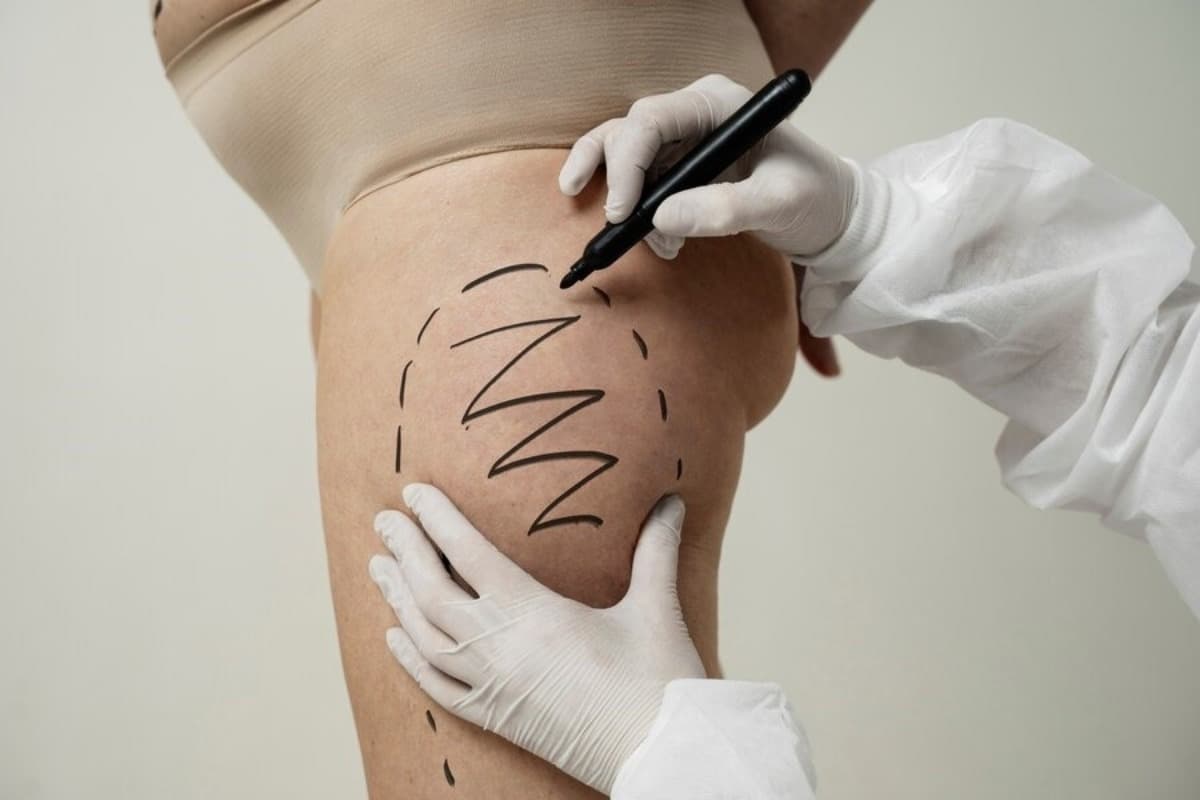
Most advice about this dimpling is written for thighs. The abdomen behaves a little differently, and knowing why changes which approaches are worth your time.
Cellulite on the stomach is not extra fat sitting on top of the muscle. It is the dimpled texture that appears when fat pushes up between fibrous bands of connective tissue that tether the skin to deeper layers. Reducing its appearance usually takes a combination: lowering overall body fat, building the muscle underneath, improving skin quality, and in some cases an in-clinic treatment that works directly on the connective tissue and skin. No single approach erases it, and any product promising that is overselling.
Why cellulite shows up on the abdomen
Under your skin, vertical bands of connective tissue called septae anchor the surface to the layers beneath. Fat cells sit in the compartments between them. When those compartments fill, the fat bulges upward while the septae stay put, and the result is the uneven surface you see.
Several things make the abdomen prone to it. Skin over the stomach is relatively thin. Estrogen influences both fat distribution and the structure of connective tissue, which is a large part of why cellulite is far more common in women. Pregnancy stretches abdominal skin and shifts the tissue underneath. Significant weight loss can leave skin that no longer sits smoothly. And genetics set much of the baseline for how your septae are arranged and how thick your skin is.
This is also why people who are not overweight can still have stomach cellulite. It is a structural issue, not purely a fat quantity issue.
Cellulite, loose skin, and belly fat are three different things
Sorting out which one you are looking at matters, because the fixes differ.
- Cellulite is a surface texture: dimpling, an orange-peel look, most visible when the skin is pinched or you are standing in certain light.
- Loose skin is laxity, common after pregnancy or a large weight loss. It hangs or creases rather than dimples.
- Subcutaneous and visceral fat are volume. Visceral fat sits deeper, around the organs, and responds well to overall fat loss but has nothing to do with dimpling.
Many people have some combination of all three, which is why a treatment that helps one can seem to do nothing for the others. Our guide to tightening skin after weight loss is the better read if laxity is your main concern.
What actually helps
Reduce the fat filling the compartments
Less fat in the compartments means less pushing against the septae. This is the highest-leverage change for most people, and it is a whole-body process rather than something you can target to one area. A moderate calorie deficit with adequate protein, kept up long enough to matter, does more than any topical product.
Build the muscle underneath
Firmer abdominal and core musculature changes what the overlying tissue drapes across. Resistance training two or three times a week also protects lean mass during weight loss, which matters because losing muscle alongside fat tends to make skin texture look worse, not better.
Support skin quality
Hydration, adequate protein, not smoking, and sun protection all affect collagen and skin thickness over time. These are slow levers, but they are real ones. Creams containing caffeine or retinol may temporarily tighten the surface and slightly improve appearance, though the effect is modest and disappears when you stop.
Be realistic about what does not work
Dry brushing, detox wraps, cellulite-specific supplements, and aggressive foam rolling have no meaningful evidence behind them for changing the structure causing the dimpling. They are not harmful, but they are not the answer either.
In-clinic options
Treatments that work on the connective tissue and skin, rather than only on fat volume, are where clinical care adds something you cannot replicate at home. LPG KeyModule treatment uses mechanical rolling and suction to work the tissue, stimulate circulation and lymphatic drainage, and improve skin firmness across a course of sessions. EmTone pairs radiofrequency with targeted pressure energy to address several contributing factors at once, and our post on whether EmTone really works sets out what results are reasonable to expect.
For patients whose main concern is abdominal fat volume rather than texture, Vanquish ME body sculpting is a non-contact option that targets fat in the treatment area. Many people benefit from combining an approach for volume with one for texture, which is something worth mapping out in a consultation rather than guessing at.
Setting honest expectations
Cellulite is common, it is not a medical problem, and it is not something you failed at. Roughly the large majority of adult women have it somewhere. Improvement is realistic. Complete elimination generally is not, and any clinic promising otherwise is worth walking away from. Results from in-clinic treatment build over a series of sessions and are maintained with periodic follow-ups, not delivered in one visit.
Talk it through with our team
At our Takoma Park and Rockville clinics we start by identifying what you are actually dealing with, often including a body composition scan so fat, muscle, and change over time are measured rather than guessed. From there we can say honestly whether a body sculpting treatment, a weight loss plan, or both make sense for you. Contact us or book a consultation to get started.