

Persistent hunger and strong food cravings are two of the main reasons diets fall apart, and they are also two of the most treatable. This is where appetite suppressants come in.
Losing weight is hard enough without a constant urge to eat working against you. When hunger keeps returning between meals, portions creep up, and staying inside a calorie target starts to feel impossible. For people in that situation, appetite suppressants can make the day-to-day part of weight loss manageable by lowering how hungry you feel and how often cravings show up. At Just Lose Weight MD, we use them inside a supervised medical weight loss plan rather than as a standalone fix.
What appetite suppressants are
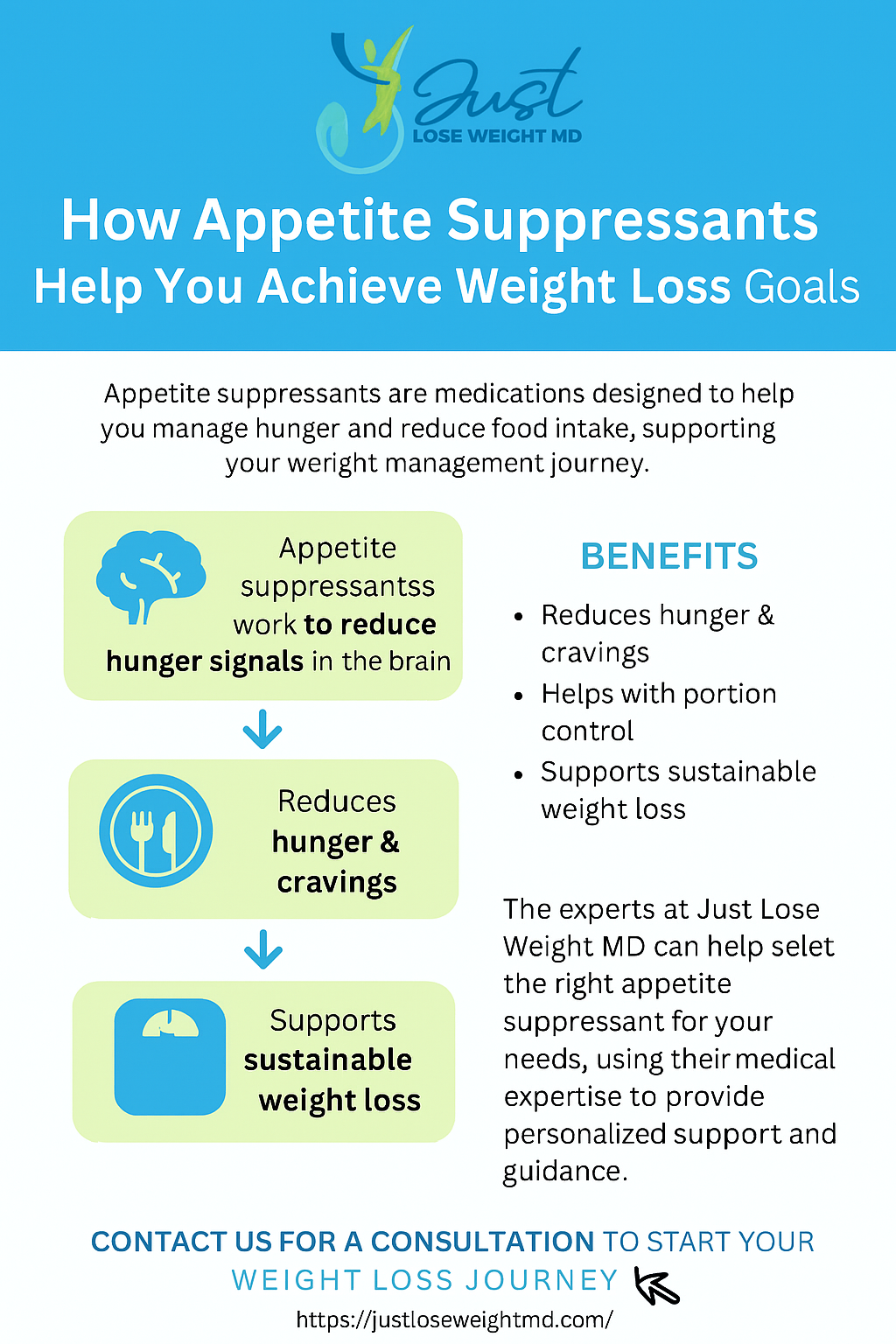
Appetite suppressants are medications or supplements that reduce hunger and help you feel full sooner. Most prescription options work on brain chemicals such as norepinephrine, serotonin, and dopamine, which help regulate the signals that tell you to eat or stop eating. By adjusting how those signals fire, the medication makes it easier to eat smaller portions and skip the unplanned snacking that adds up over a day.

How they work
Hunger and fullness are controlled by the brain, so appetite suppressants act there. In practice they do a few things:
- Strengthen the signals that tell you that you are full and satisfied.
- Cut down on hunger between meals.
- Reduce cravings, especially for high-calorie foods.
Together these effects help you eat less without feeling deprived, which supports the calorie deficit that weight loss depends on.
Prescription and natural options
There is no single appetite suppressant that fits everyone. The right choice depends on your health history, your goals, and how your body responds.
- Phentermine and similar stimulant-type medications reduce hunger and are usually prescribed for short-term use under supervision.
- GLP-1 medications such as semaglutide and tirzepatide slow digestion and act on appetite centers in the brain, which keeps you fuller longer and lowers cravings.
- Natural and over-the-counter options, including fiber-based products, can take the edge off hunger for some people. Our natural weight loss products and Bella Plus program fit patients who prefer a gentler approach.
What appetite suppressants can help with
Used alongside sensible eating and regular activity, appetite suppressants can help in a few practical ways. Hunger is easier to manage, so a lower-calorie routine feels less punishing. Portion control comes more naturally when your appetite is smaller. And because impulse eating drops off, it becomes easier to stick with the plan on hard days.
Who should consider them
Appetite suppressants are not for everyone. They tend to help people who:
- Feel hungry even while following a reasonable diet.
- Struggle with portion sizes or steady snacking.
- Have tried diet and exercise without seeing much change on the scale.
- Want medical oversight while they lose weight.
Our providers review your medical history, current medications, and goals before recommending anything, so the plan matches your health rather than a one-size-fits-all script.
Safety and medical supervision
Because these medications affect brain chemistry and can influence heart rate and blood pressure, they should be taken under the care of a qualified provider. Possible side effects include a faster heartbeat, trouble sleeping, dry mouth, and mood changes. During treatment our team checks how you are responding and adjusts the dose or the medication if needed, which keeps the plan both safer and more effective.
Fitting them into a full weight loss plan
Appetite suppressants work best as one part of a broader plan, not the whole thing. A typical program at our clinic includes:
- Nutrition guidance built around your routine and preferences.
- Activity recommendations matched to your fitness level and goals.
- Support for building habits you can keep long after the medication ends.
- Ongoing check-ins to track progress and change course when needed.
That combination is what makes the results last. If you are outside our clinic areas, our telehealth visits cover Maryland, Virginia, and Washington, DC.
The bottom line
Appetite suppressants can be a genuine help when constant hunger is the thing standing between you and your goals. They are a tool, though, not a cure, and they work best with real support around them. If cravings keep derailing your progress and you want a safe, supervised way forward, contact us or book online to talk through your options. You can also read our guides on weight loss centers that prescribe phentermine and semaglutide near you.